Intro to Endocrinology
No description yet. This curated deck is ready for daily study.
Card preview (24)
Hormone
Chemical substance that sends a message to another cell in the body
Give example of endocrine, exocrine, neurocrine, and paracrine cellular messaging
Endocrine: bloodstream Exocrine: GI tract Neurocrine: neurologically Paracrine: interstitial fluid
List the glands that we cover
• Hypothalamus • Pituitary • Thyroid • Parathyroid • Adrenal gland • Pancreas • Ovaries • Testes
List the 6 hormone classifications
• Amine • Peptide • Protein • Glycoprotein • Steroid • Fatty acid
Amine hormones
• Trp or Tyr are modified to create amine hormones • Epinephrine, triiodothyronine, thyroxine, serotonin • Very short half-lives
Peptide hormones
• Chain < 50 aa • Water soluble, don’t cross membranes easily • Must first bind to membrane-bound receptors • Vasopressin and oxytocin
Protein hormones
• Chain > 50 aa • ACTH, calcitonin, insulin, glucagon, oxytocin
Glycoprotein hormones
• Conjugated to carbs • FSH, LH, and TSH • Solubility and half-life similar to protein hormones
Steroid hormones
• Derived from lipid, usually cholesterol • Hydrophobic, must be transported in blood bound to carrier proteins • Can cross membranes due to lipids • Aldosterone, cortisol, estrogen, progesterone, testosterone, other androgens (DHEA)
Fatty acid hormones
• Derivatives of arachidonic acid • Eicosanoids, leukotrienes, prostaglandins, thromboxanes • Rapidly degraded, effective for only seconds
Metabolism
The sum of chemical processes that occur within a living organism to maintain life (catabolism + anabolism)
Anabolism
Creating substances
Catabolism
Breaking down substances
Hormone metabolism
The speed of anabolism or catabolism determines the extent to which hormones are capable of binding to receptors and eliciting effects
Conditions that modify hormone metabolism/levels
• Speed of production or breakdown affects blood hormone levels • Amount of carrier protein affects protein-bound hormone levels • Disease states (e.g., cirrhosis) affect enzymatic hormone breakdown
Effects of alcohol consumption on hormone metabolism
• Increase testosterone degradation • Leads to cirrhosis, which can cause less albumin and other binding proteins
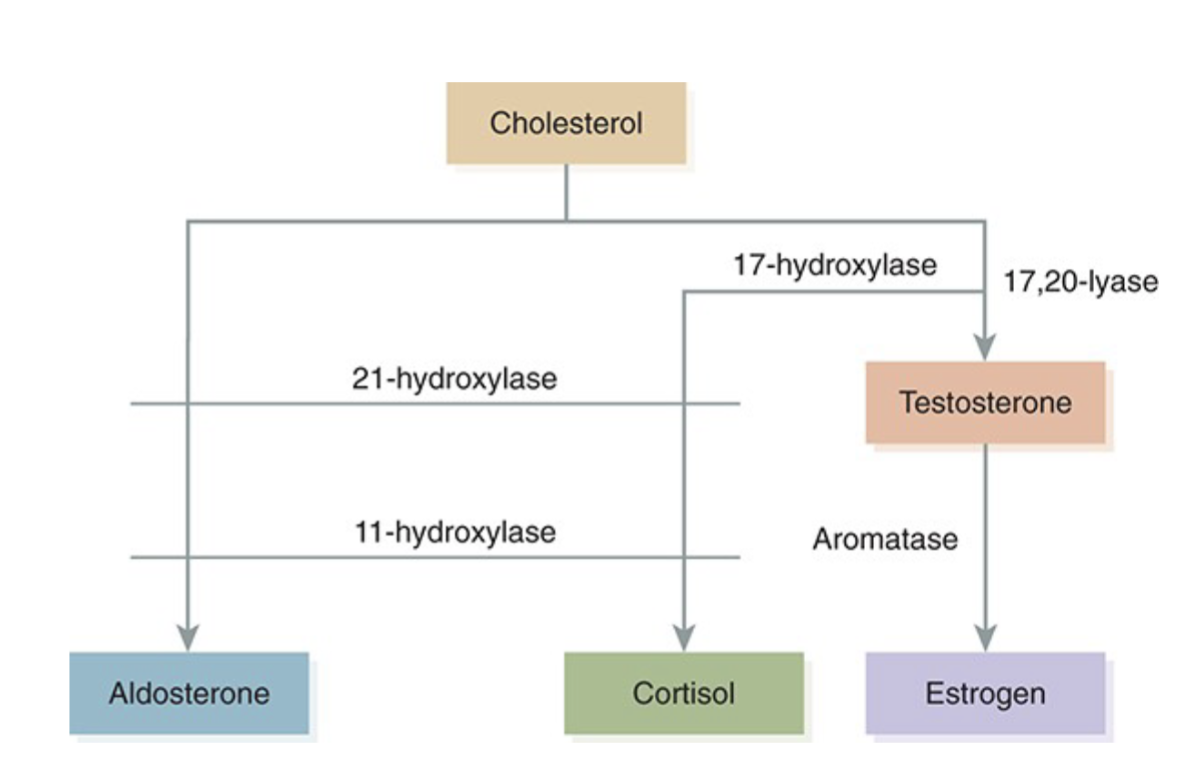
Adrenal steroid hormone synthesis
Many hormones are produced in the adrenal gland by a cascade of enzymatic reactions
Which two organs predominantly eliminate hormones?
Kidney and liver
General mechanism for hormone elimination
Blood -> Liver tags certain hormones for destruction or creation of different substances (or kidney)
Steroid hormone elimination mechanism
Inactivating metabolic pathways and excretion in urine or bile
Thyroid hormone excretion mechanism
Inactivated by intracellular deiodinases
Catecholamine hormone excretion mechanism
Rapidly degraded within blood circulation
Fatty acid derivative hormone excretion mechanism
Rapidly inactivated by metabolism and typically active for a short time period (seconds)
Negative feedback
A stimulus will feedback upstream and decrease production of itself (e.g., thyroid)