3.4 Alkenes
No description yet. This curated deck is ready for daily study.
Card preview (24)
What are Alkenes
Alkenes are unsaturated hydrocarbons Alkenes contain a carbon- carbon double bond somewhere in their structure
What is the General Formula for Alkenes
CnH2n
How do we name alkene positional isomers
Numbers need to be added to the name when positional isomers can occur

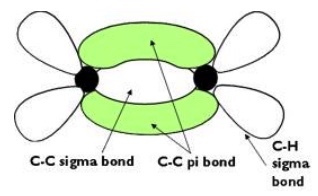
What do C=C double bonds consist of?
• C=C double covalent bond consists of one sigma (σ) bond and one pi (π) bond • π bonds are exposed and have high electron density • They are therefore vulnerable to attack by species which ‘like’ electrons: these species are called electrophiles
Define an Electrophile
an electron pair acceptor The double bonds in alkenes are areas with high electron density. This attracts electrophiles and the alkenes undergo addition reactions
Define an addition reaction
A reaction where two molecules react together to produce one
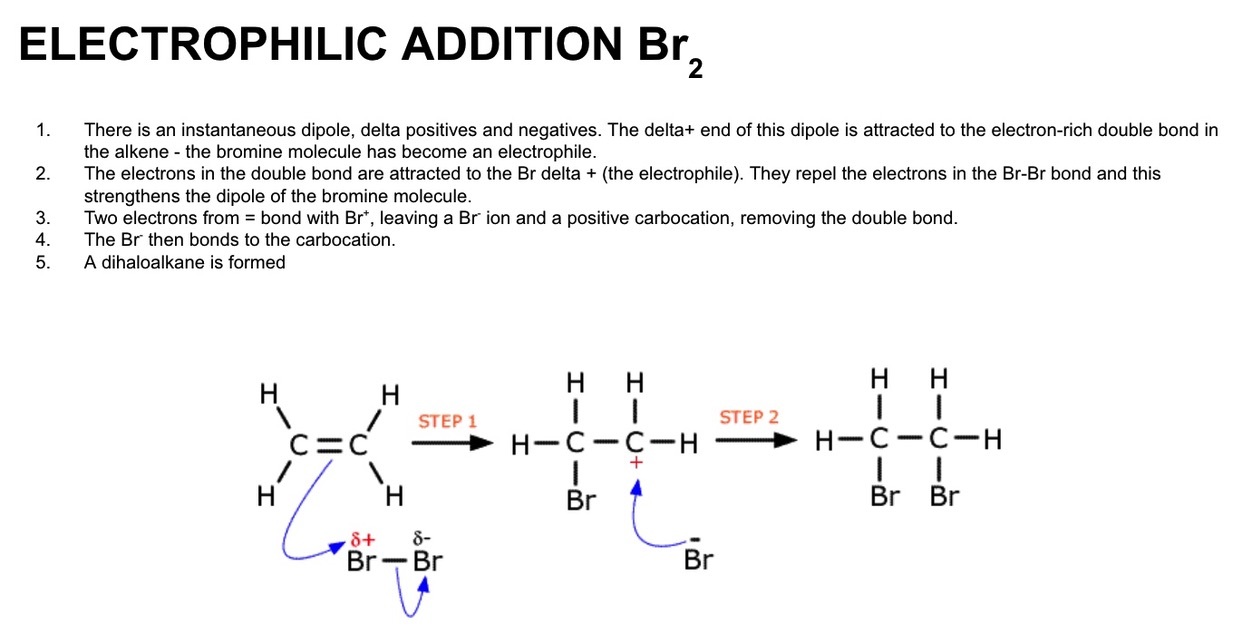
Reaction of bromine with alkenes:
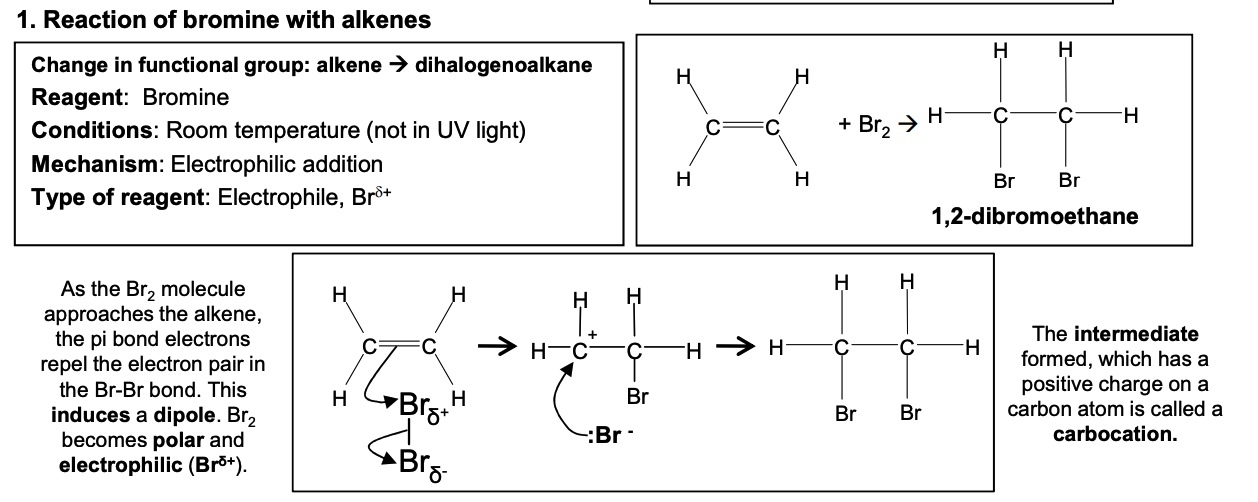
Define a Carbocation
The intermediate formed during electrophilic addition reactions of alkenes, which has a positive charge on the carbon atom
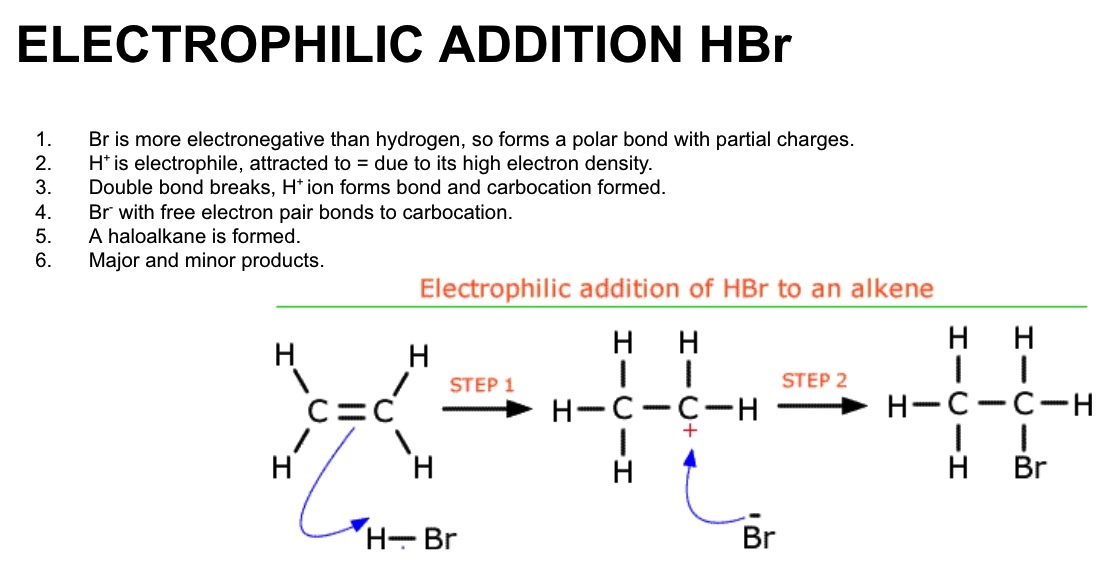
Reaction of hydrogen bromide with alkenes
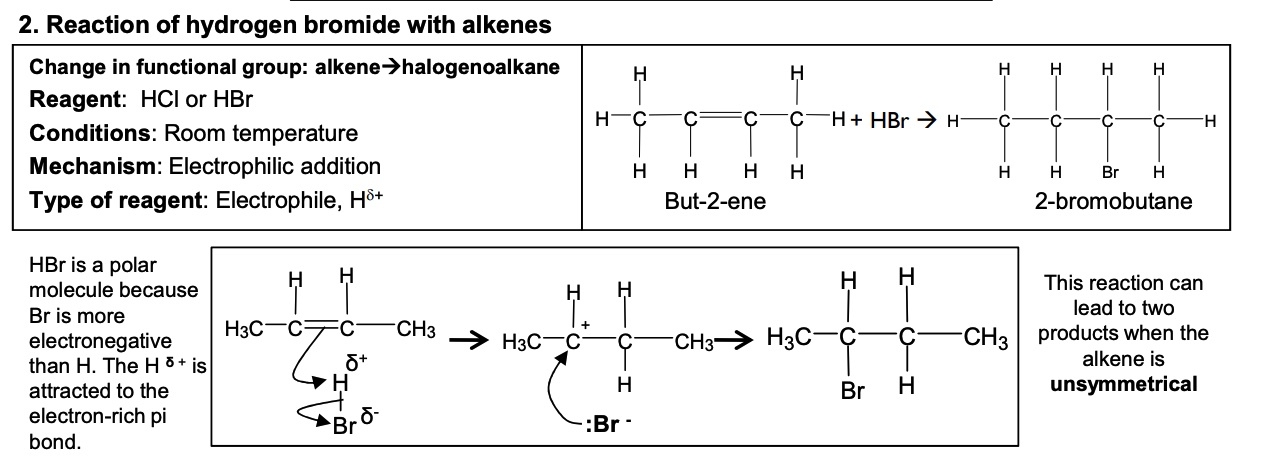
Why is this carbocation intermediate the most stable?
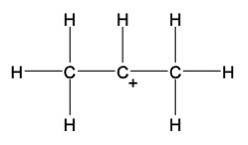
the methyl groups on either side of the positive carbon are electron releasing and reduce the charge on the ion which stabilises it In electrophilic addition to alkenes, the major product is formed via the more stable carbocation intermediate
What is the order of stability for carbocations
tertiary > secondary >primary
What are stereoisomers
Stereoisomers have the same structural formulae but have a different spatial arrangement of atoms
When do E-Z Isomers arise?
• There is restricted rotation around the C=C double bond • There are two different groups/atoms attached both ends of the double bond
What is a priority group?
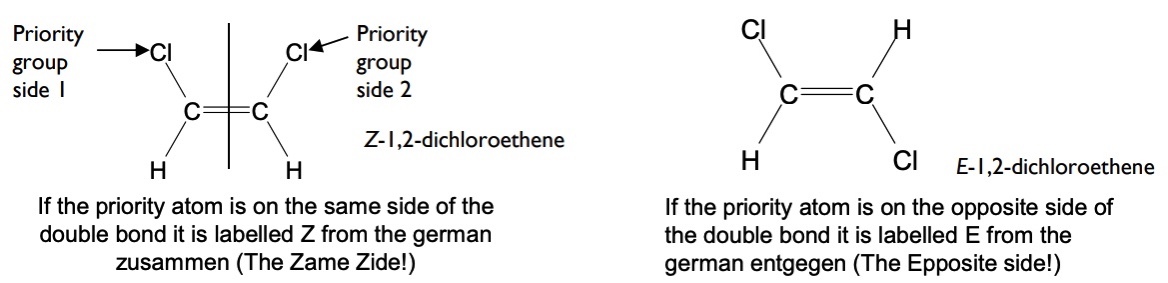
• The atom with the bigger atomic number is classed as the priority atom
How do we name E-Z Isomers?
• First determine the priority groups on both sides of the double bond
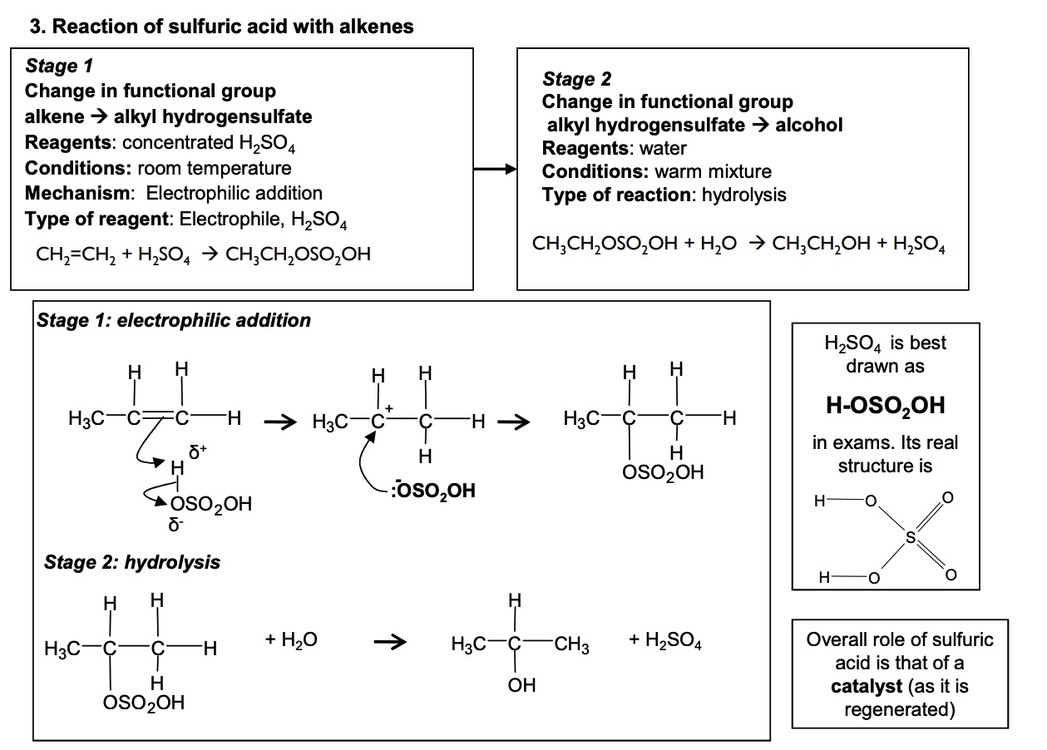
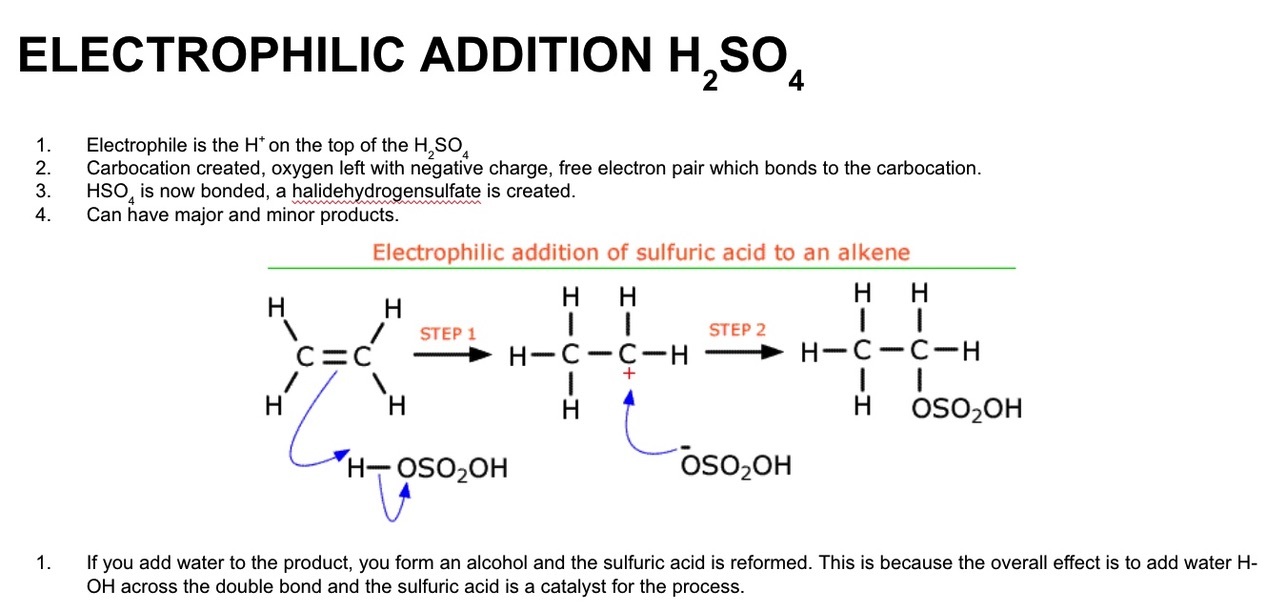
Reaction of sulfuric acid with alkenes
Define Hydrolysis
a reaction where the molecule is split by the addition of water
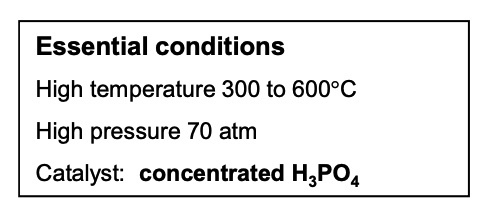
What are the essential conditions for the hydration of alkenes to form alcohols
Electrophilic addition mechanism summary
• Electrophile attracted to double bond • Electrophiles are positively charged so accept electron pair from double bond • A positive ion (carbocation) is formed • A negatively charged ion forms a bond with the carbocation
Electrophilic addition bromine summary
Electrophilic addition HBr summary
Electrophilic addition H2SO4 summary
What is a major product?
Most stable. On the secondary or tertiary carbocation. You need to put the electrophile on the carbon closest to the end
What is a minor product?
less stable, on primary carbocation