Chapter 6
No description yet. This curated deck is ready for daily study.
Card preview (24)
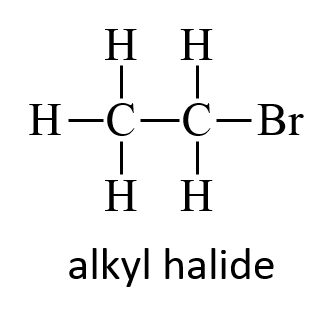
Alkyl halides
Halogen, X, is directly bonded to sp3 carbon
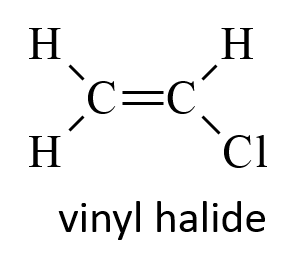
Vinyl halides
X is bonded to sp2 carbon of alkene
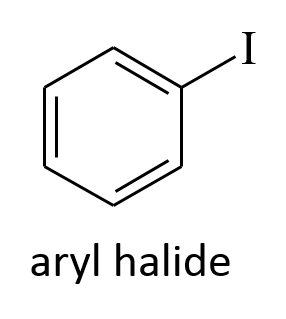
Aryl halides
X is bonded to sp2 carbon on phenyl ring
CH2X2
methylene halide
CHX3
haloform
CX4
carbon tetra halide
Geminal dihalide
two halogen atoms are bonded to the same carbon
Vicinal dihalide
two halogen atoms are bonded to adjacent carbons
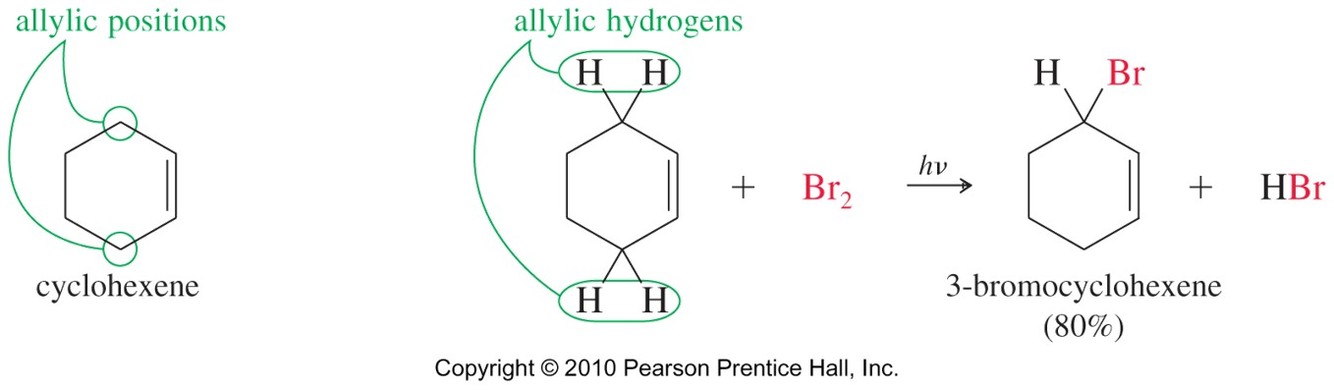
Allylic Halogination
• Allylic radical is resonance stabilized • Bromination occurs with good yield at the allylic position (sp3 C next to C=C)
SN2 Reaction
• Bimolecular nucleophilic substitution • Concerted reaction: new bond forming and old bond breaking at same time • Rate is first order in each reactant • Inversion at carbon
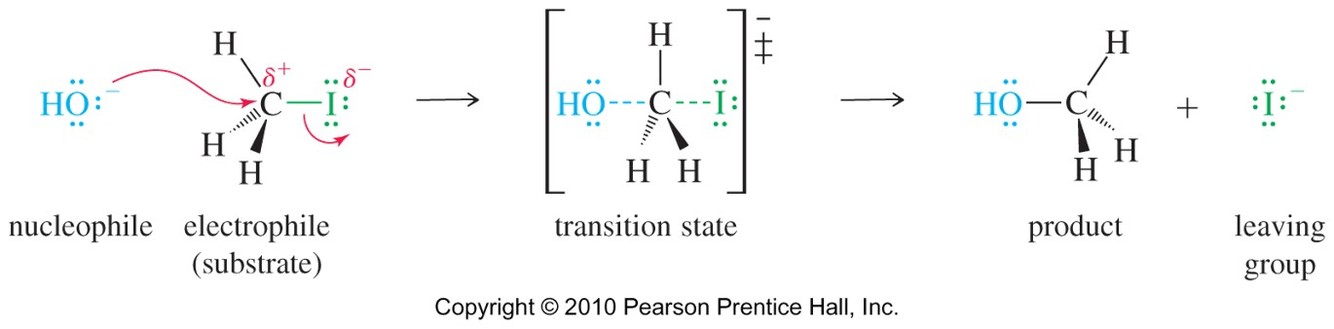
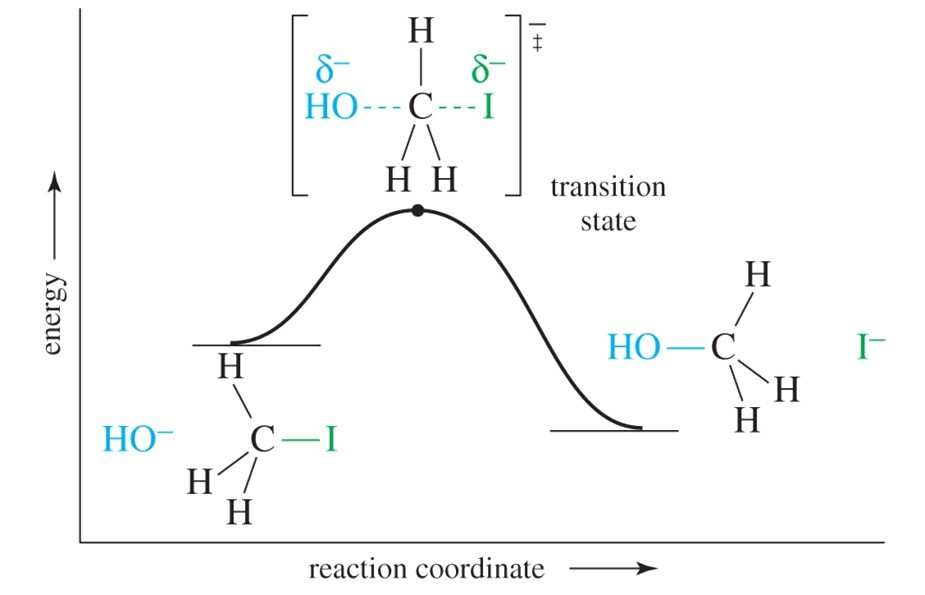
SN2 Energy Diagram
• The SN2 reaction is a one-step reaction • Transition state is highest in energy
What does SN2 stand for?
SN2 stands for: substitution, nucleophilic, bimolecular
Bimolecular
TWO species are involved in rate determining step
SN2 Mechanism Favored When:
Substrate is PRIMARY and UNHINDERED GOOD (strongly basic) Nucleophile GOOD (weakly basic) Leaving Group POLAR, APROTIC Solvent
Kinetics of SN2 Reaction
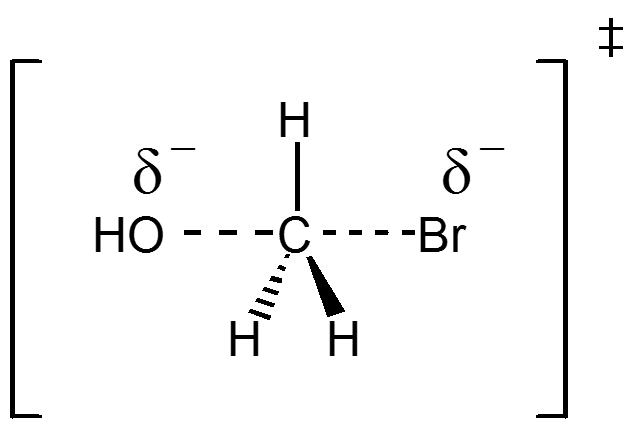
Second order reaction: Rate = k [:Nu] [substrate] Suggests that C-Nu bond forms as C-X bond breaks Requires backside attack of nucleophile Trigonal bipyramidal transition state
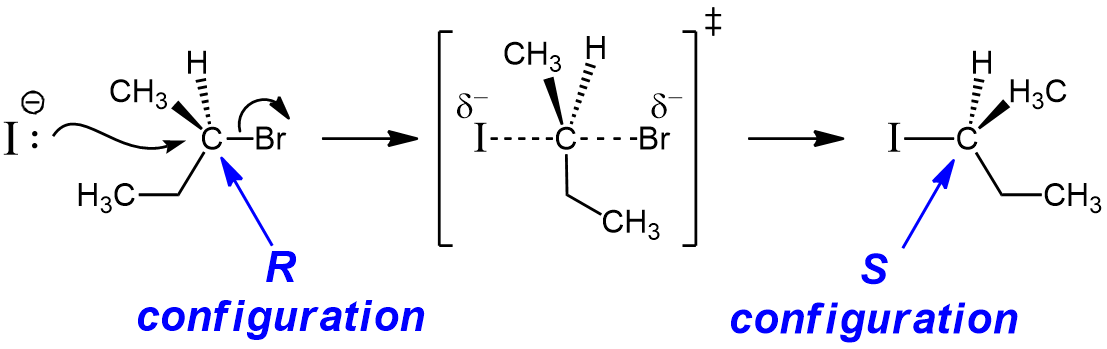
SN2 and Stereochemistry
• Backside attack of nucleophile results in INVERSION of configuration • The stereochemistry is always reversed, but the R/S does not always switch. Depends on the priority of the nucleophile and substituents on the stereocenter.
SN2 Orbital Inversion
Inversion of Configuration Required by Orbitals
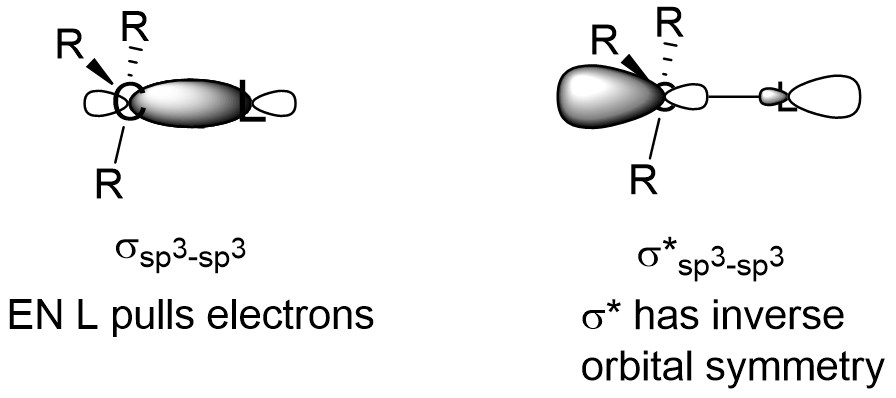
Relative Reactivity of Halides via SN2
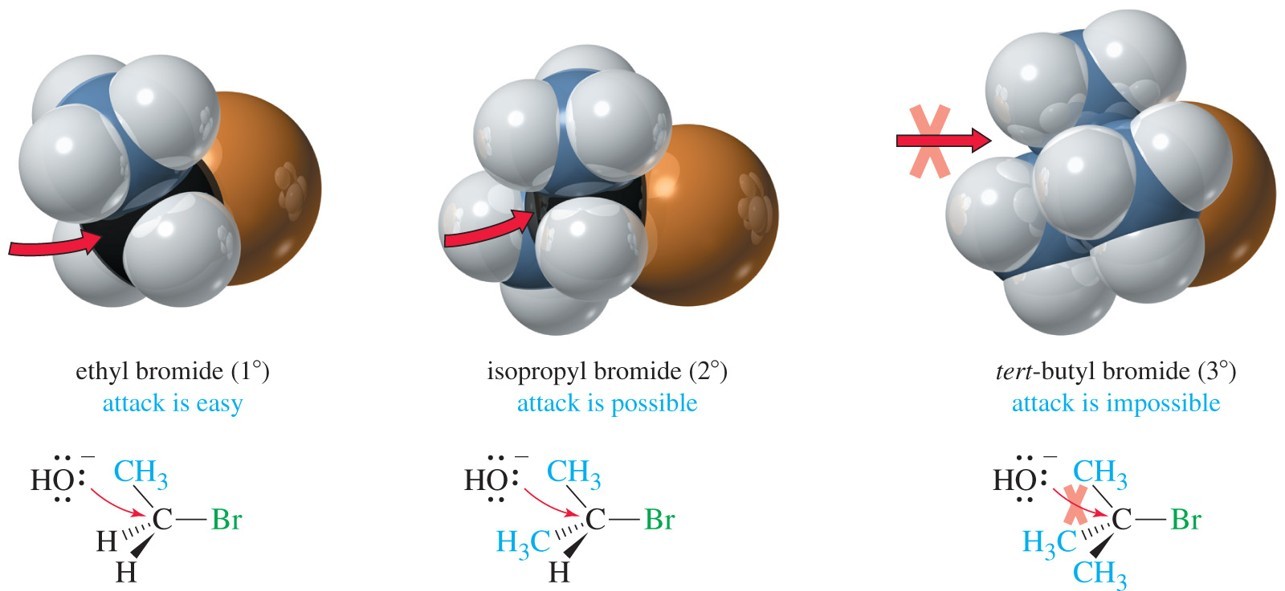
methyl > primary > secondary >> tertiary (doesn’t happen)
Steric Effects of the Substrate on SN2 Reactions
As substitution increases, steric crowding increases. Approach of the nucleophile is increasingly hindered.
Nucleophilicity across a period
Nucleophilicity increases across a period (R to L).
Nucleophilicity in groups
Nucleophilicity increases down a group.
Nucelophilicity in acids vs bases
Neg. charged species a stronger nucleophile than its conjugate acid. Why? Ability to donate electrons.
What makes a good leaving group in SN2 reactions?
More stable anion = better leaving group
Leaving Groups
Good leaving groups: I -, Br -, sulfonates Modest leaving group: Cl - Poor leaving groups: F -, - OH, CH3CO2 -, PhO -