organics II 5.4
No description yet. This curated deck is ready for daily study.
Card preview (24)
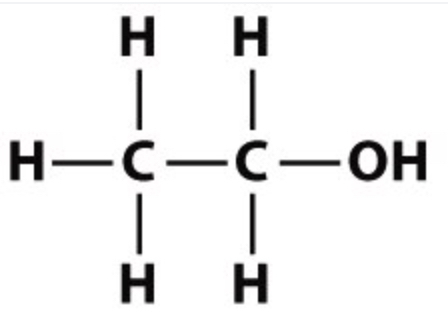
what are alcohols?
organic molecules containing an -OH functional group
what is the formula of methanol?
CH3OH
what is the formula of ethanol?
C2H5OH
what is the formula of propanol?
C3H7OH
what is the formula of butanol?
C4H9OH
why is a number sometimes involved in the name of the alcohol?
as -Oh can be attached in the middle of the carbon chain instead of the end
industrial ethanol manufacture hydration of ethene:
ethene (C2H4) gas is mixed with steam (H2O)
industrial ethanol manufacture hydration of ethene - advantages:
makes pure ethanol can run continuously
industrial ethanol manufacture hydration of ethene - conditions needed:
300 degrees 65 atm pressure phosphoric acid (H3PO4) catalsyt
industrial ethanol manufacture hydration of ethene disadvantages:
conditions require lots of energy non-renewable raw material used (crude oil)
industrial ethanol manufacture fermentation of glucose:
glucose (C6H12O6) is fermented microbiologically
industrial ethanol manufacture fermentation of glucose - conditions needed:
yeast (provides enzymes) 30 degrees (optimum temperature for enzymes) anaerobic (no oxygen) prevents oxidation
industrial ethanol manufacture fermentation of glucose advantages:
renewable raw material used (sugar cane) conditions not energy-intensive
industrial ethanol manufacture fermentation of glucose - disadvantage:
makes impure ethanol must be done in individual batches
oxidation ethanol combustion:
ethanol tends to completely combust because of the oxygen atom in the -OH group resulting in a non-luminous blue flame C2H5OH + 3O2 > 2CO2 + 2H2O
oxidation ethanol microbial oxidation:
many micro organisms such as bacteria and fungi use oxygen in the air to oxidise ethanol into ethanoic acid can happen aerobically C2H5OH + 2O > CH3COOH + H2O
oxidation ethanol chemical oxidation:
heat ethanol with potassium dichromate (VI) and dilute sulphuric acid this forms ethnic acids C2H5OH + 2O > CH3COOH + H2O the orange dichromate ions are turned into a green chromium ions meaning reaction always has colour change
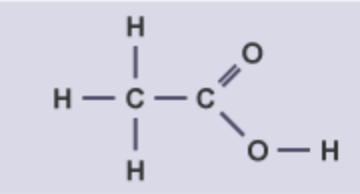
what are carboxylic acids?
organic molecules containing an -COOH functional group
what is the formula for methanoic acid?
HCOOH
what is the formula for ethanoic acid?
CH3COOH
what is the formula for propanoic acid?
C2H5COOH
what is the formula for butanoic acid?
C3H7COOH
what is vinegar?
an aqueous solution of ethanoic acid
how do you form vinegar?
when ethanol undergoes microbial oxidation C2H5OH + 2O > CH3COOH +H2O vinegar has a very sour and acrid taste because of the acidity of ethanoic acid