U1-3-1 - Bond Polarity
No description yet. This curated deck is ready for daily study.
Card preview (12)
Formula for phosphorus
P4
Formula for sulfur
S8
Name all covalent network elements
Boron, silicon, carbon
Pure covalent bond
A bond in which bonding electrons are shared equally. Also called ‘non-polar bond’
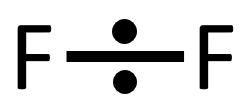
Polar bond
A bond in which bonding electrons are shared unequally and which has a permanent dipole.
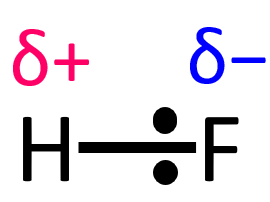
What causes chemical bonds to be polar?
Electronegativity difference between bonding atoms. (usually ≥0.4)
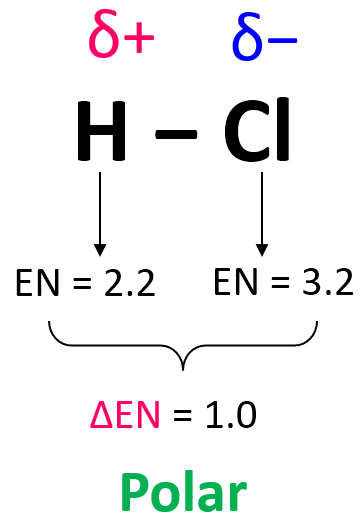
How do you determine the ‘ionic character’ of a bond?
Calculate electronegativity difference. Higher ΔEN = more ionic character (bonding e- shared less evenly)
What do δ+ and δ− mean?
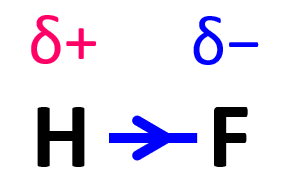
Delta plus/delta minus - partial charges
A compound has a low melting/boiling point and does not conduct electricity in any form. What bonding and structure does it have?
Covalent molecular
A compound has a very high melting/boiling point and does not conduct electricity in any form. What bonding and structure does it have?
Covalent network
A compound has a very high melting/boiling point and conducts electricity when molten/dissolved. What bonding and structure does it have?
Ionic (lattice)
Li+2S2− What is wrong with this ionic formula?
More than one of Li+ present, must be shown in brackets: (Li+)2S2−