a mix of AS topics
No description yet. This curated deck is ready for daily study.
Card preview (24)
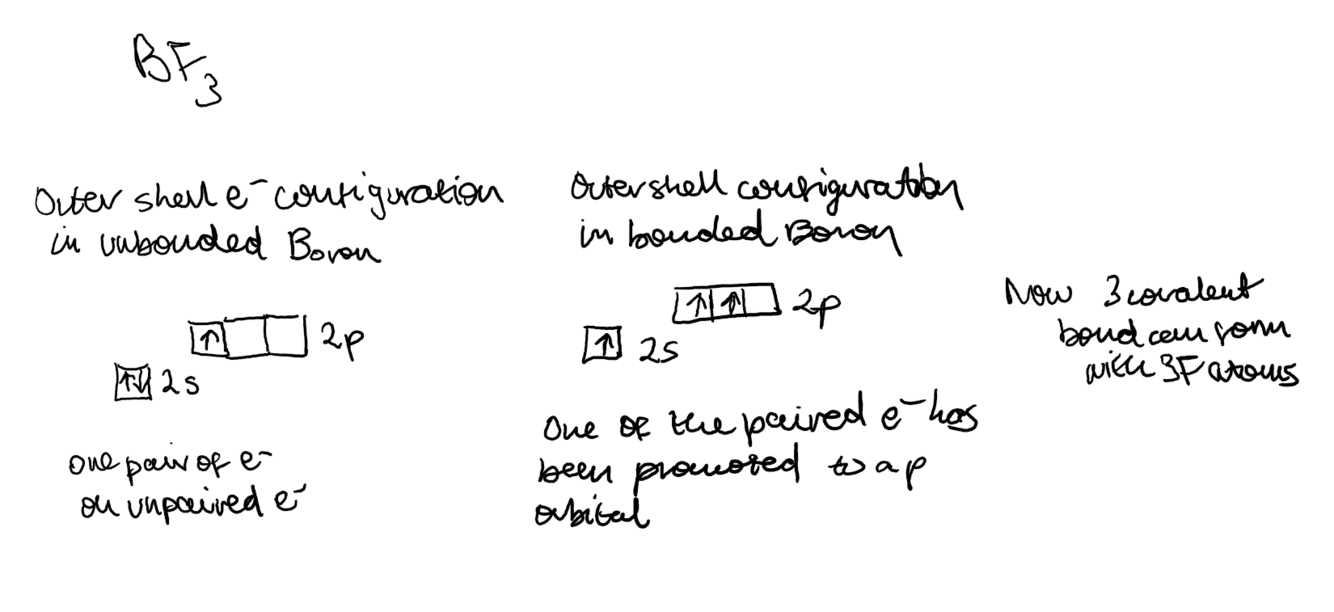
define covalent bond explain how they occur
strong electrostatic attraction between a shared pair of e- and the nuclei of the bonded atoms unpaired e- in an orbital of an atoms shared with an unpaired e- in another atom’s orbital atoms may promote e- into previously unoccupied orbitals in the same energy level to form more covalent bond
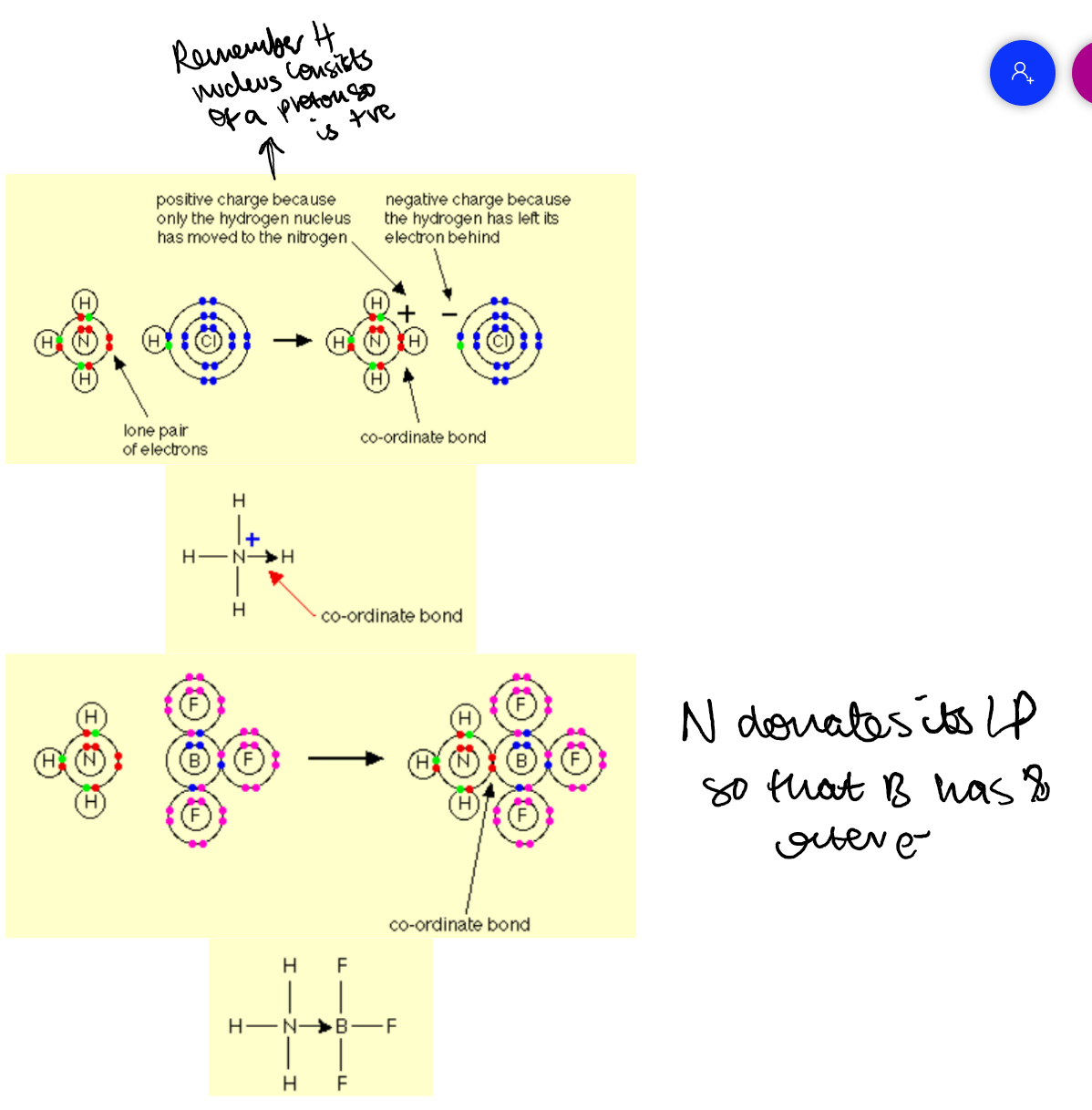
define dative covalent bond
a covalent bond where both e- come from the same atom
Activation Energy
Minimum energy (1) required before a reaction can occur (1)
disadvantage of dot and cross diagrams
assumes atoms within the compound are arranged along one plane only (sometimes true)
metallic structure and properties of metals
lattice of postive metal ions surrounded b sea of delocalised e- heat conductivity due to delocalised e- being able to carry heat energy and passing it through metal cations high density due to cations packing closely together
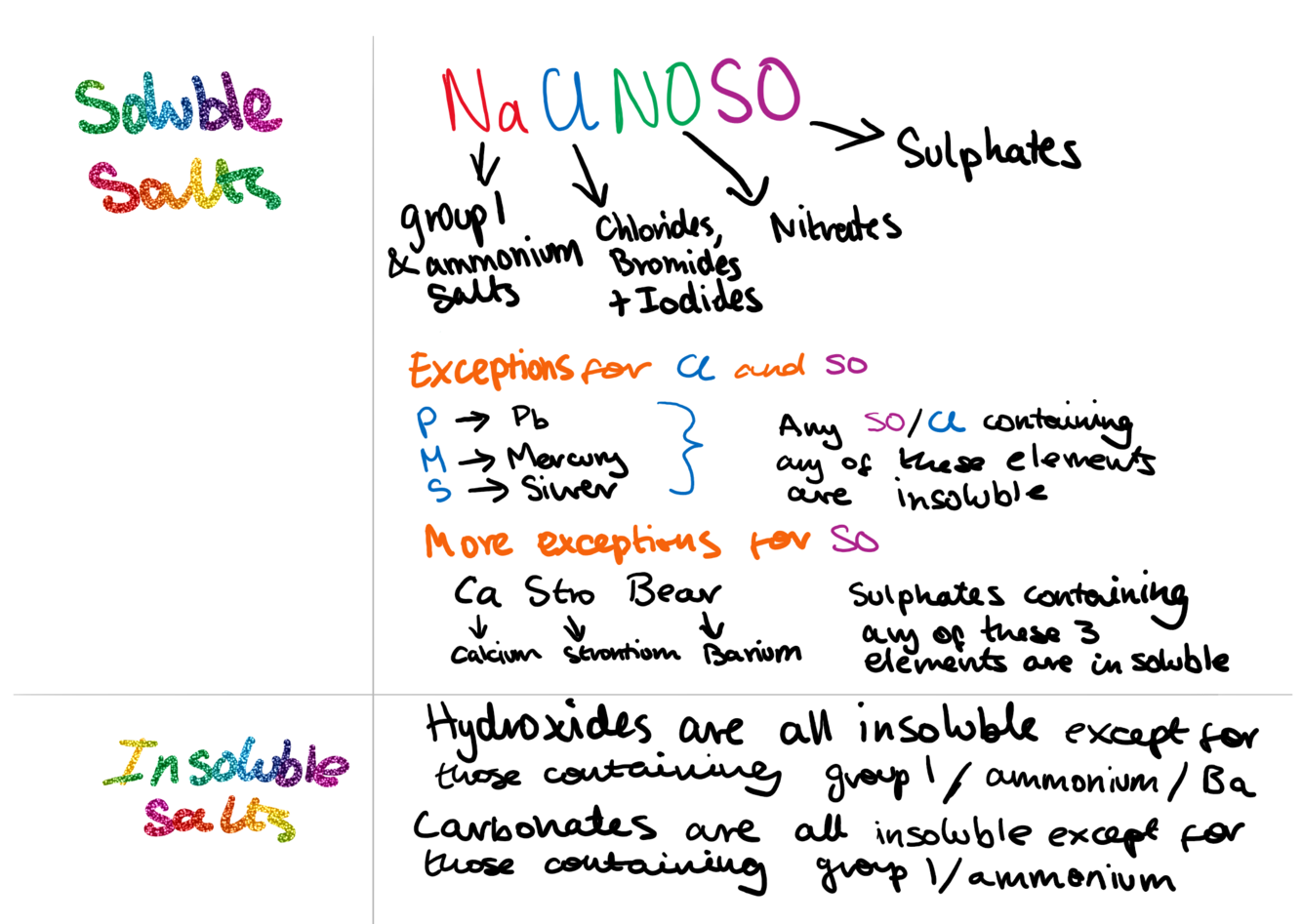
solubilty rules
expalin what determines the shape of a molecule
determined by arrangement of e- pairs around the central atoms which is influenced by the repuslion between the e- pairs (depends if e- pairs are BP or LP) e- pairs repels each other to be as far apart as possible all BP repel each other equally LP repel more than BP because they are held closer ti the central atom LP repel LP more than they repel BP molecules take up the shape that minimises repulsion
define electronegativity
ability of an atom to attract e- pair in a covalent bond towards itself
define enthalpy change
heat energy change measured at a constant pressure
what does Hess’s law state
enthalpy change of reaction is independent of which route it takes
define mean bond enthalpy
energy required to break a covalent bond measured over a range of molecules containing the bond
define periodicity
pattern in the change of properties of a row of elements which is repeated across the next row
standard enthalpy of combustion definition
enthalpy change when 1 mole of a substance is completely burned in excess oxygen under standard conditions
standard enthalpy of formation definition
enthalpy change when 1 mole of a compound is formed from its constituent elements in their standard states under standard conditions
test for ammonium, hydroxide and sulphate ions
positive ion tests: • test for ammonium ions • Add dilute NaOH (aq) to sample in a test tube and gently heat • Dip damp litmus paper (so ammonia gas can dissolve) into test tube • NH3 gas produced in positive test which turns litmus paper blue as it is alkaline • NH4+ (aq)+ OH- (aq)⟶ NH3 (g)+ H2O (l) test for negative ions • Hydroxide ions • as they are alkaline, either a pH meter or litmus paper can be used • red litmus paper turns blue in presence of OH- • sulphate ions • Add dilute HCl (to eliminate presence of CO32- ions) • Then add BaCl2 (aq) • A white precipitate of barium sulphate forms: • SO42-(aq)+Ba2+(aq)⟶ BaSO4(s) • carbonate ions • add dilute HCl • Bubble gas formed through test tube of limewater • effervescence and limewater turns cloudy in positive result
explain the trend in first IE in group 2 from Mg to Ba
decreases because: • atomic radius increases - greater distance between outermost e- and nucleus • shielding increases • both these things decrease the strength of the electrostatic atraction between the -vely charged outermost e- and the +vely charged nucleus = less energy required to overcome the attraction
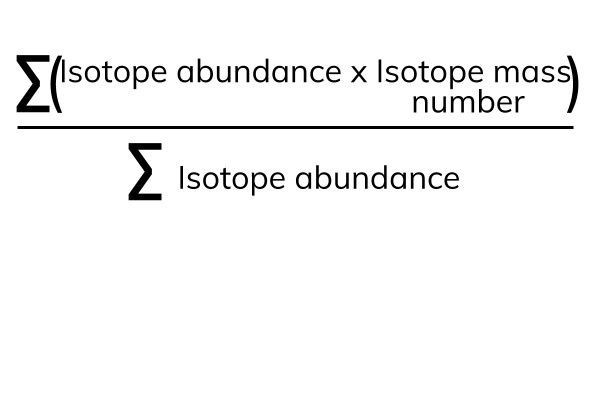
A sample of Boron has a relative atomic mass of 10.8. the sample contains the isotopes 10B and 11B. calculate the percentage abundance of 10B in this sample
let the abundance of 10B be x. this means that the abundance of 11B is (100-x) set up an equation to find x: (10x+11(100-x)) / 100 = 10.8 so 10x+1100-11x=1080 so x=20 Therefore the abundance of 10B is 20%
which element in period 3 will have the highest 2nd IE and why?
Na because the e- being removed from the Na+ is in a 2p orbital (all other elements have their outer e- in a higher energy level from 3s and above)
explain the overall trend of 1st IE across period 3
increases because: • no. of protons increases • same shielding • decreased atomic radius • results in stronger electrostatic attraction between outer e- and nucleus • more energy required to remove e-
why do Al and S have a lower than expected 1st IE
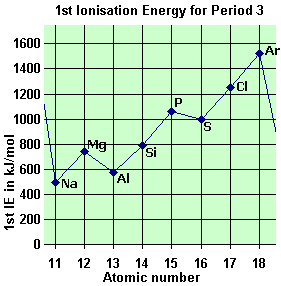
the outer electron of Al is in a 3p orbital rather than 3s (like Na and Mg )which is further from nucleus = more shielding from inner electrons = less energy needed to remove this electron the 3p4 electron configuration in S means that electron lost from S is from an orbital containing a pair of e- = more repulsion between electrons in S= less energy required to remove electrons
explain the trend in electronegativity across period 3
electronegativity increases Nuclear charge increases= more protons and same amount of shielding= decreasing atomic radius= increased electrostatic attraction between nucleus and the electron pair in the covalent bond
explain the trend in melting points across period 3
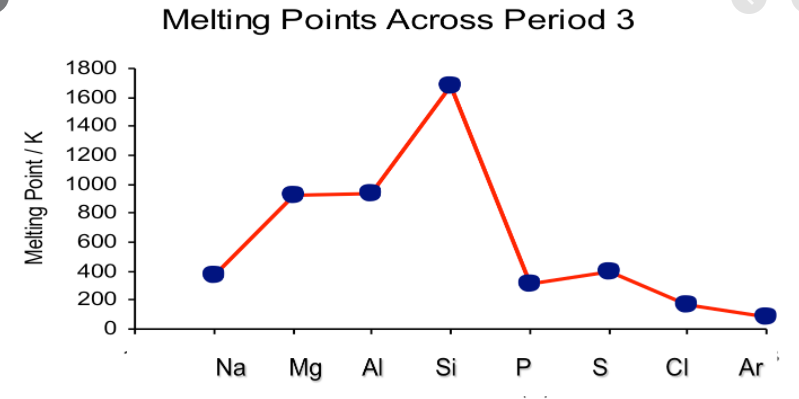
from Na to Al, ionic radius decreases and more delocalised electrons= stronger electrostatic attraction between delocalised electrons and positive metal ions = more energy required to overcome Si has a very high melting point due to macromolecular structure - many strong covalent bonds - lots of energy needed to overcome S8 has a higher melting point than P4 because it is a bigger molecule= more electrons= stronger Van der Waals’ forces between S8 molecules= more energy needed to separate the molecules Ar has a very low melting point as it is monoatomic = very weak Van der Waals’ forces between the atoms= little energy needed to separate Ar atoms
explain the trend in atomic radius across period 3
decreases because: • bigger nuclear charge and shielding stays the same= stronger electrostatic attraction between outer electrons and nucleus= outer electrons drawn in more closely to nucleus
explain trend of atomic radius down group 2
Atomic radius increases down the group because: there are more filled shells between the nucleus and the outer electrons the outer electrons are more shielded from the attraction of the nucleus = weaker electrostatic attraction between -ve e- and +ve nucleus so outer electrons are further from the nucleus