18B: Amines, amides, amino acids and proteins
No description yet. This curated deck is ready for daily study.
Card preview (24)
Identify the functional group.
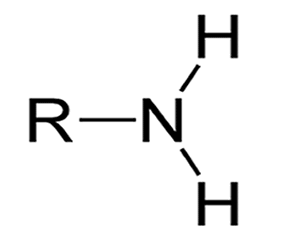
(Primary) amine
Identify the functional group.
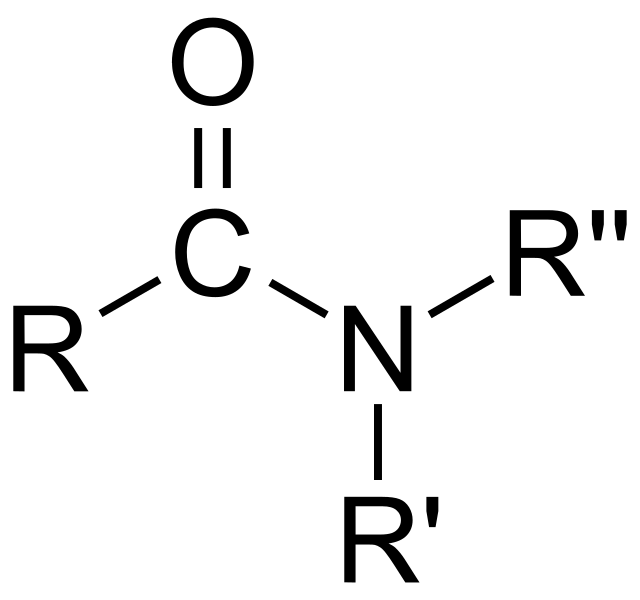
Amide
Identify the type of molecule.
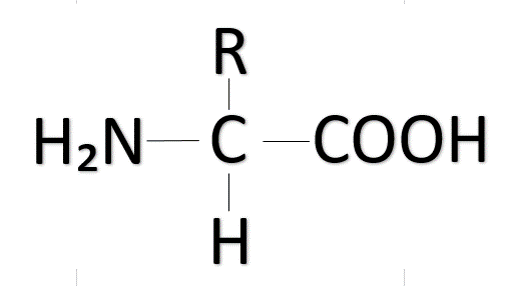
Amino acid
Reaction of butylamine with water: Product.
Butylammonium hydroxide
Describe the reaction: Butylamine -> Butyl ammonium hydroxide
React with water
Reaction of butylamine with acids: Product.
Butylammonium salt
Describe the reaction: Butylamine -> Butyl ammonium salt
React with acid
Reaction of butylamine with ethanoyl chloride: Products.
N-Butylethanamide + HCl
Describe the reaction: Butylamine -> N-Butylethanamide
React with ethanoyl chloride, Produces HCl
Reaction of butylamine with halogenoalkanes: Products.
Secondary amine + Hydrogen halide
Describe the reaction: Butylamine -> Secondary amine
React with halogenoalkane, Produces hydrogen halide.
Reaction of butylamine with Copper(II) ions: Product.
Complex ions.
Describe the reaction: Butylamine -> Complex ion
React with Copper(II) ions.
Explain the difference in basicity of ammonia, primary aliphatic and primary aromatic amines.
Aliphatic amines: Alkyl group pushes electrons onto the nitrogen, so the lone pair is more available, so basicity is higher than ammonia Aromatic amines: Lone pair is partially delocalised in the benzene ring, so the lone pair is less available, so basicity is lower than ammonia.
Describe the preparation of primary aliphatic amines from halogenoalkanes.
React with concentrated ammonia in ethanol.
Describe the preparation of primary aliphatic amines from nitriles.
React with LiAlH4 in dry ether
Describe two methods for the preperation of primary aliphatic amines.
React halogenoalkane with concentrated ammonia in ethanol. React nitrile with LiAlH4 in dry ether.
Describe a method for the preperation of primary aromatic amines.
React aromatic nitro-compound with tin and concentrated hydrochloric acid.
Describe a method for the preperation of amides.
React acyl chloride with concentrated ammonia.
State the type of reaction for the formation of a polyamide.
Condensation polymerisation.
Explain the acidity and basicity of 2-amino acids in solution.
Forms zwitterions in moderate pH, as the amine group accepts a proton and the carboxylic acid group donates a proton.
Explain the effect of aqueous solutions of 2-amino acids on plane-polarised monochromatic light
The 2 carbon is chiral (unless the R group is hydrogen), so they form optical isomers and rotate plane-polarised monochromatic light.
When is a peptide bond formed?
When amino acids combine, by condensation polymerisation, to form a protein.
Describe how to form the constituent amino acids from a protein.
Hydrolysis of the peptide bond.